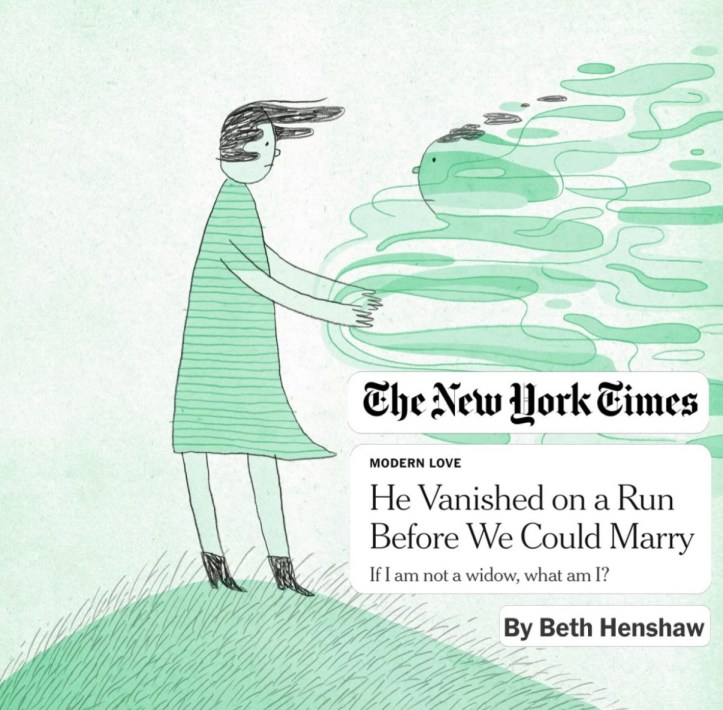

You can’t say “fuck” in The New York Times.
Or shit. Damn is sometimes permissible, but not encouraged.
I recently published an essay in The New York Times Modern Love column, and there’s a scene at the end where I’m in my car crying at a gas station. My card wasn’t working, and the machine told me to go inside to see a cashier.
The dashboard read three miles until empty, so I wiped the tears off my cheek, put on my sunglasses, and went inside.
I cried a lot back then, when the grief was so fresh and my world was too quiet.
Waiting in line with my sunglasses on and shoulders drooped, I stared straight ahead. When it was my turn, the cashier asked, “How’s your day going?”
I had no energy for the predictable, shallow response: “Good. How about you?”
In a monotone voice, I replied truthfully. “Fucking terrible.”
You can’t say fuck in The NYTimes, said my editor.
Oh. Okay. How about: “Shitty as all hell-”
You can’t say shit either.
What about those little asterisks? We could bleep it out.
No, you’ll have to think of a different word that still carries the weight of that grief.
Huh. No hell, no fuck, no shit, and no damn? These are the kind of the days those words are invented for.
It’s not that I ran out of gas or that I had to go inside to pay. It didn’t matter that I hadn’t eaten breakfast or that my bank account was dwindling. My day was fucking terrible because my lover’s ashes were sitting on the mantel above an unlit fireplace, waiting to be released back into the wilderness.
Both the cashier and the man behind me laughed. Not a pity laugh, a true chuckle.
“Ain’t that the truth,” the man behind me said. Then he paid for my coffee. I froze for a moment before saying thank you. His kindness interrupted my dismal outlook on life. For a moment, I didn’t feel so alone.
In The New York Times I said my day was “Downright dreadful.”
I reckon most people dread going back to work after the loss of a loved one.
I didn’t have a job to return to. Ian died in the middle of a major life transition.
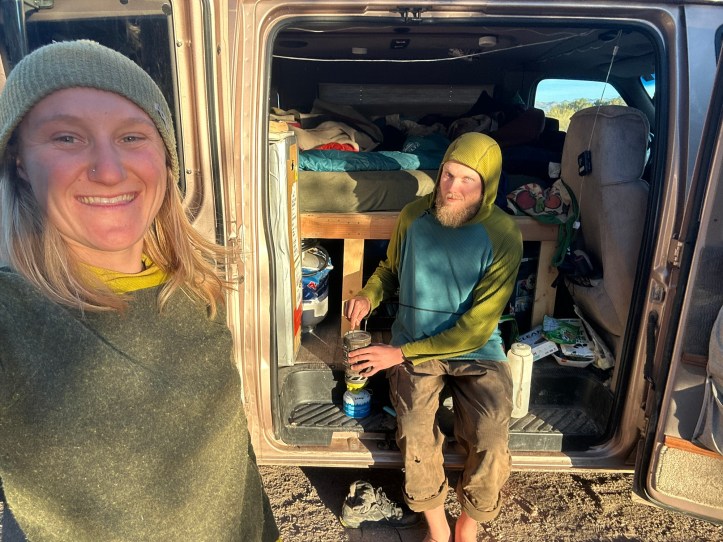
We moved to Page, Arizona and lived in a new house for only twelve days before he disappeared in the mountains. Half of those days were spent camping because the air conditioning broke. Our new teaching jobs started while I searched for him. Ian was classified as a missing person for two months. Two terrible months.
The months following his memorial were excruciatingly empty. I had no place to be, no job to dread going to, no sense of normalcy, no co-workers saying the wrong thing. Nothing to anchor me to the days of the week.
Most people have their partner’s clothes to sort through when they’re grieving. I didn’t, not really.
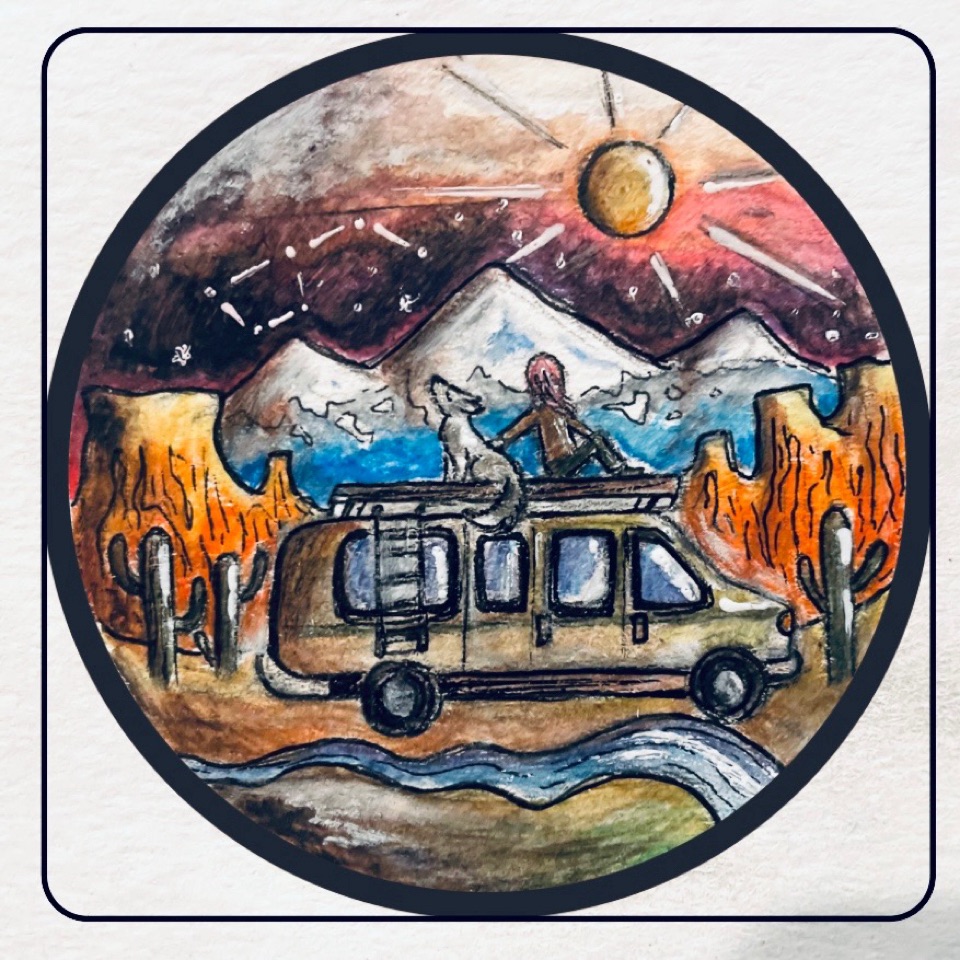
Two months before Ian died, the van we lived in was stolen from a parking lot in Las Vegas, along with nearly everything we owned in it.
Someone once tried to make light of the situation by saying, “At least you get to go shopping!”
Anyone who knows me knows that I’m a penny pincher. On a regular, wonderful day, I do not like to go shopping.
After our van was stolen, Ian and I hit as many thrift stores as we could. Ian was 6’5” so he didn’t have much luck fitting into other people’s clothes.
“The tall man tax,” is what he called it, meaning he had to buy new.
I shopped with a scarcity mindset, buying pants that almost fit and jackets that would keep me warmish.
I accepted donated clothes from friends even when they weren’t practical.
“All that’s in here is a onsie and a dress,” Ian scoffed, opening a bag of donated clothes.
“Well that’s more than we had this morning, isn’t it?” I replied. We laughed because there was little else to do.
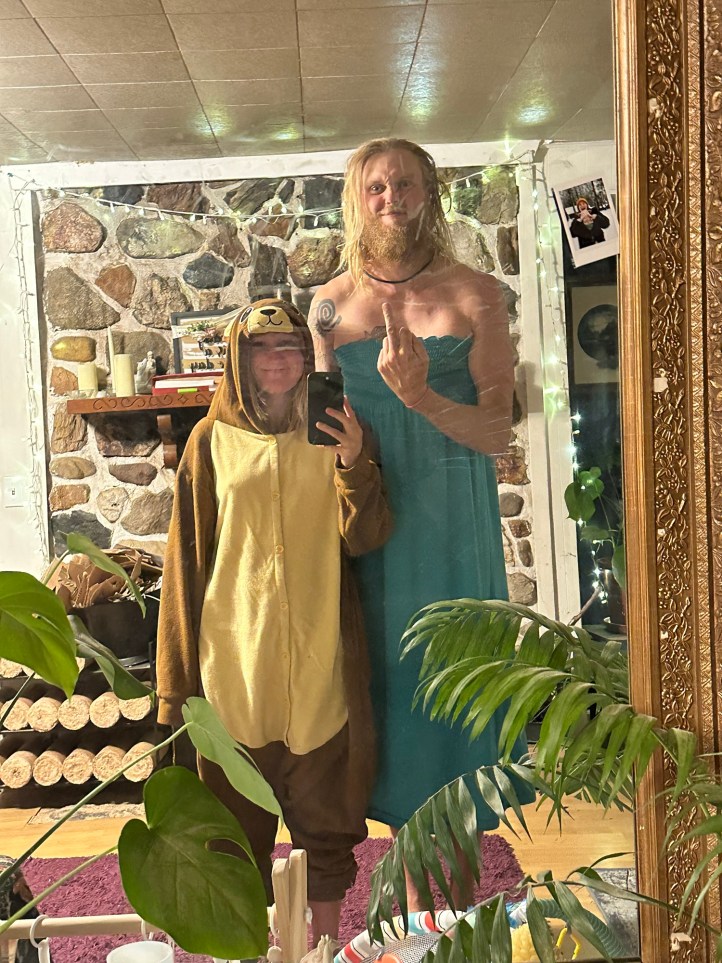
Clothes hold memories. Our clothes held the stench of sweaty miles hiked in the backcountry and campfire smoke we cooked over, but his new clothes only held the creases from being folded in a box, not yet worn.
After he passed, I donated most of what he bought to the local thrift store, hoping a tall man out there would be happy to find something in his size.
Most people get to grieve with their toaster. That might sound silly, but when a loved one dies, it can be hard enough to press the button down.
Our toaster was among the things stolen in our van, and I didn’t have the energy to go shopping at Walmart. It was easier to skip breakfast.
Most people have a bed to avoid getting out of when they’re grieving. For three weeks, I slept on the floor on a camping pad until a stranger on Facebook Marketplace agreed to drop a mattress off for me.
Ian and I spent most of our time together living out of a backpack and sleeping under a tarp. That lifestyle wore me down after three years. I was looking forward to having a cozy home to return to after a full day of adventure.
There was nothing cozy about living in a two bedroom house with no beds, bare walls, and no one to share it with.
I was content to sit in the nothingness for a while. It felt almost right, like a physical representation of the loss.
A month after Ian’s memorial in the mountains, I remember a friend calling to ask how I was doing.
All I could think to say was, “I’m fucked.”
She agreed. She didn’t try to soothe me or tell me it was going to get better or that everything would be okay or to look on the bright side. She drove across the desert to my house. We didn’t hike vast distances, dance under lasers, or do anything exciting like we normally did.
Instead, she handed me a plate of eggs in the morning. A toaster appeared on the counter and the next day she handed me a plate of eggs on a toasted bagel. She hit play on Spotify and music filled the empty, still air I’d been living in.
We giggled and cried and sat in silence. She walked into the desert matching my short, painfully slow steps. She printed funny pictures of us all together and taped them to the inside of cabinets for me to find weeks later.
And when she left, more girlfriends came to visit.
Without asking, they strung up fairy lights in the living room. Lines were drawn on the carpet with a vacuum cleaner I didn’t buy. The cabinets under my sink were filled with sponges, paper towels, disinfectant sprays and bleach: things I forgot existed.
Candles were lit in each room. A vase of vibrant flowers sat on the kitchen table. They pulled Ian’s sketchbook out and placed his unfinished drawings in frames on the wall.
They took the steps I couldn’t take to make my house feel more like a home.
This isn’t The New York Times, I can say how fucking grateful I am for my community.
Most of my life I’ve counted my community as my mom, siblings, best friends, and partner/spouse/boyfriend. But now, I can’t forget to count the cashier at the gas station and the stranger who paid for my coffee.
Community can share the weight of grief, making it easier to carry. I learned to let them.
Instead of saying, “I got this,” I learned how to say, “Thank you.”
Thank you to the readers who make this blog possible. Consider becoming a paid subscriber to support my writing.