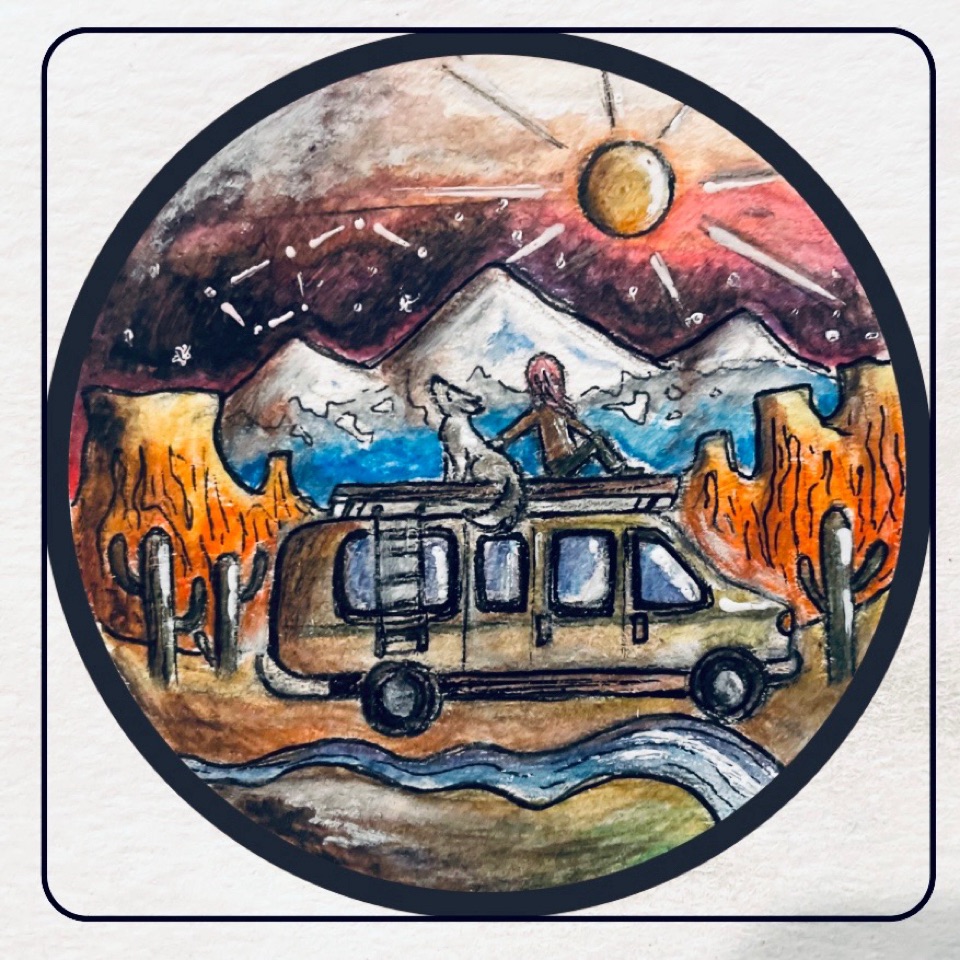

In July, I graduated my M.F.A. program at Western Colorado University with a master’s degree in creative writing and a concentration of nature writing. I was thrilled and honored to be selected as the student commencement speaker. The speech was not recorded, so I thought I’d share it here.

When I was a kid, I told stories before I could read or write them. Whenever I had free time, I’d run up to my room, lock the door, put a CD in my Hello Kitty boombox and play with my Barbies.
This might sound sweet, but it was more cutthroat than you might think. My dollhouse had rivalries, grudges, famine, fires, divorce, and more than one Barbie was beheaded. I never let my siblings play dollhouse with me because they didn’t know that Jessica and Britney can’t be in the same room because Joe cheated on Jessica with Briney two years ago.
Most nights I looked forward to my dad’s bedtime stories about Pete the Dragon. Pete lived in the woods and wanted to play baseball with the neighborhood kids. He was nervous they wouldn’t accept him, but the kids weren’t scared or mean to him just because he was a dragon. Much like Aesop’s Fables (written about 2,600 years ago) each story of Pete the Dragon had hidden lessons about fairness, inclusion, good sportsmanship, and playing for the love of the game, not winning.

Soon I started making up my own bedtime stories. My dad always listened until the very end, which is really saying something because I am known to ramble on and on and on. At the end of each story, he’d tell me: that could be a book one day!
When I was 17, my dad passed away from a terminal brain tumor. The way I feel most connected to him now is through writing and storytelling.
I share this story with you all because the job of writers can feel like a solitary, sometimes lonely pursuit. For most of my young adult years, writing felt like a secret. Something I did when I was alone.
Before I started this program, I wrote because I enjoyed it, it helped me express myself, increased my confidence, helped process complex emotional experiences.
Then I met Laura Pritchett. And she started to pose casual questions like, “What can your writing do for the planet?”
Or, at the end of a Zoom class while saying goodbye, she’d make simple statements such as, “Write for Earth.”

And that got me thinking about so much more than what writing can do for me.
I started thinking about what our writing can do and what writing has done for the world.
A well researched book or article can expose crimes, give voice to victims and spark societal change. Rachel Carson’s Silent Spring led to the ban of DDT and the creation of the US environmental protection agency.
A good story ignites our imaginations while exploring the human condition. Tolkien’s Lord of the Rings essentially invented the fantasy genre and established the norm of writing multi-volume series.
Authors can shatter societal expectations.
I remember waiting in line dressed up as Rita Skeeter with a feather for a pen, behind my siblings, who were dressed as Snape and Dumbledore, waiting for the new HP release.
Before Harry Potter, it was assumed that kids weren’t capable or were simply uninterested in reading 700 page books.


Storytellers have an immense capacity to shape the world.
Our modern world is in the midst of taking on a new shape.
Two weeks ago an article was published in The Atlantic with the title, “The End of Reading is Here.”
Rose Horowitch wrote about how we are now in a postliterate society, the first time in human history where the majority of the population can read, but chooses not to.
The National Endowment for the Arts conducted a survey and found that less than half of adults in the United States read a book of any kind in 2022.
What’s happening to cognitive function as a result?
Reduced ability to comprehend, draw conclusions, think deeply, and sustain focus for a long period of time.
Some people are calling it a literacy crisis, some are saying it’s an empathy crisis. The statistics are concerning. To account for our shortening attention span, New York Times best sellers today have sentences that are about one-third shorter than they were 100 years ago.
We should wonder about this, we should care, but do I think the end of reading is here? No.
I think how we are telling and consuming stories is changing.

As a society, we have so much more than books now. There’s technology we can and should take advantage of as storytellers.
We can write movies, film YouTube videos and post our poetry on social media. The ability to circulate a story has never been quicker and easier than it is today. We can write to an audience without a publisher’s permission through Substack, podcasts, newsletters and blogs.
For the first time in history, average citizens have the ability to communicate with the whole world through the internet!
This is also the first time in history that we’re being told that machines should write for us.
Across the country, university’s funding for the arts and sciences have been cut. But grants are being awarded to them if they choose to integrate AI in their syllabus.
As students we are told that we need to learn AI tools in order to keep up, but we shouldn’t use it for school, no that’s plagiarism, but teachers should use AI tools to detect if a student used AI, but if we don’t learn how to use it, we won’t be ready for the workforce, but in 2026 alone, more than 150,000 people have been laid off and replaced with AI.
Sam Altman, the founder of OpenAI shared his long term plan for apps like ChatGPT. He said, “We see a future where intelligence is a utility like electricity or water and people buy it from us on a meter.”
That’s real, can you believe it?
It’s hard for me to even believe the narrative that “AI is inevitable” and “necessary” and going to be part of “every day life.”
I’m a nature writer. We’re still using pen and paper because we’ve read the neuroscience. We know hand writing is better for creativity, memory, and brain function.

And have you ever tried calling the bank or some customer service line and after six minutes of talking to an AI bot found yourself screaming over and over, CONNECT ME WITH A HUMAN but the robotic voice pleasantly says, return to main menu and you have to start all over again?!
Oh my god! And the tech giants want robots to write about love?
No. Absolutely not. We have poets for that.
AI is nothing more than theft from artists, and they’re stealing from us because we are the experts. Our teachers who are sitting in this room have had their books stolen to train A.I.

Our world is rapidly changing, but are we going to leave it up to AI to decide our future? Or are we, the experts, going to offer an alternative course?
I don’t think AI should have a seat at the table with writers, artists, or universities.
Because although I really want to publish a book, as soon as it’s done I’m going to be working on the next one. I don’t write just to finish something really fast, I enjoy the process of writing, thinking, revising, and shaping a story.
I love to be creatively challenged and writing helps me process life. Writing helps me be a better human. I don’t want to use a tool to skip any part of that process.
Laura Pritchett encouraged me to write for Earth, and I will continue to do so.
But I’d like to add one more thing to her advice.
Write for humanity.
Write from the heart, write from pain. Make your readers laugh, be brutally honest. Use your intelligence to imagine a better future for all of us.
Put your human hands and inventive mind to work because I truly believe that our world becomes a little better every time we make art.
I applaud everyone in this room who has chosen to pursue a degree of fine arts while the world is grappling with ethical and non-ethical uses of technology.
There are graduates in this room who pursued this degree in the midst of giving birth, burying loved ones, working full time, raising babies, kids, teenagers, and dogs.

Today, we get to celebrate that hard work. And while this degree may seem expensive now, think of ALL the money we’re going to save not having to add intelligence to our utility bill.
Writing a book takes a community. We gather inspiration from every conversation, song, movie, and experience we have. Every person we meet, love, and lose becomes part of the stories we tell.
Thank you to the loved ones who came to watch us graduate and cheer us on, and who have also supported us through this program.
And I’d also like to acknowledge all of our loved ones who aren’t in the room with us, the ones who are on Zoom and the ones who are with us in spirit.
And since my dad’s not here, I’ll share with you one final thing.
He loved taking me and my siblings to baseball games.
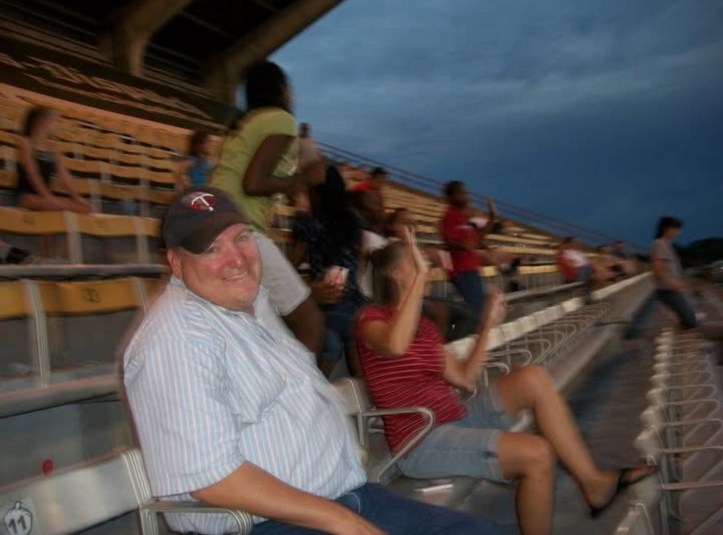
I grew up at the baseball field, and for those who didn’t, one of the very best parts of attending a stadium baseball game is…….
Doing the wave.
Yes, we’re going to do it. In a moment, wait! Don’t start yet.
We’re going to do the wave together because this is your graduation, this is a time to have fun and celebrate! but I’m a writer. This has a deeper meaning.
Today you’ll graduate and leave the safety of your cohort and teachers. You’ll go back into a world where you might be the only one around reading a book, much less writing one.
And when you’re out there, I want you to have the confidence to say yes to opportunities. Even if they seem random, or silly, or it’s something you haven’t ever done before.
When a creative opportunity comes your way, I want you to jump up out of your seat and offer your expertise. And if the person who’s sitting next to you stands up, I don’t want you to sit there thinking there’s enough people standing already, because it’s not.
If just one person does the wave with me, it’s not going to work, it won’t be enough. This is true in creative endeavors.
So while you’re jumping out of your seat saying yes to opportunities, don’t forgot to bring the person sitting next to you with you.

The more minds we put together, the more voices we have in the conversation, the better.
Okay, okay, we’re going to do it. When I stand on this side of the stage, I’m going to point, and the first person in the row is going to stand up with their arms above their heads. Once the person next to you does it, you do it too.
I’ll start on this side of the stage and come back.
Do not hesitate. I’m only going to do this one time. Alright, are you ready?
Yes, we really did the wave. It was beautiful and fun and then we walked across the stage and got our diploma in the mail 3-6 weeks later.

Interested in learning more about Western’s low residency M.F.A.?
Check it out here or let’s find some time to chat about it!
90% of the program is remote, so I got to write with my classmates scattered across the United States. For one week each summer, we all met in Gunnison, CO to writer together in person.


That was a great read and congratulations!
Hereâs one of my favorite photos from Wawona in Yosemite of the Merced River. Three friends reading in the river.
Love, Suzanne from the Poetry Tribe
LikeLiked by 1 person
Thanks for reading! Miss you and the poetry tribe!
LikeLike
I am so pleased to have a copy of this !!!
Heather Gray *Real Estate Listings & Sales * *Vacation Rental Managemen**t* *(303)*618- 4969 NedAXIS.com *HeatherGray007@gmail.com HeatherGray007@gmail.com*
Your referrals mean so much- Thank you
LikeLiked by 1 person