Pushing my paddle through glassy water almost feels like a crime. I want to be a part of the mirrored image of sky and stone on shimmering blue water, but my presence disturbs the peace. Each stroke propels me deeper into the canyon.
It’s early. We’re the first tour of the day. We might even be the first paddlers into the canyon. No motor boats or jet skis are here bumping music yet. Helicopter tours aren’t rumbling over us, the air is still. The water, tranquil.
Once again, it’s me disturbing the peace and quiet. I can’t stop talking. I’m like a broken record that keeps repeating various phrases like, “Wow,” and “Oh my gosh,” and “The water used to be up there!”
Antelope Canyon, one of 96 major side canyons on Lake Powell, is looking more and more like a canyon every day.
It’s been eight months since I paddled into Antelope.
Last summer, I thought I memorized this place. I could close my eyes and picture every bend in this winding canyon. I knew where the ravens nested and which crack in the rock signaled half a mile left in the paddle until we hit the shore.
Toward the middle of the summer, I stopped wearing my watch. I didn’t need it, my natural clock was more dependable. I could guess how much time it would take us to reach the back of the canyon and adjust that clock based on how fast or slow my guests were paddling and which direction the wind was blowing that day.
But now, the alcove where I sat to eat an apple each day last summer is stranded on a cliff, 32 feet above where I paddle.
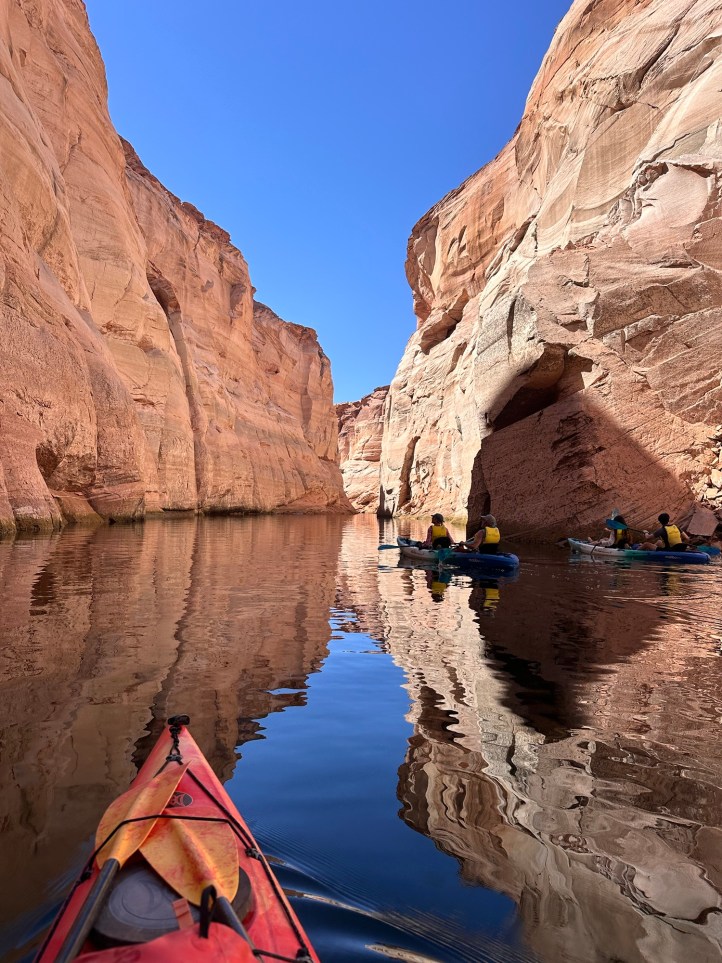
In one year, Lake Powell’s water has dropped 32 feet.
I am giddy with excitement once I recognize the pile of rocks where I used to load and unload guests on the shore for a swimming break. I point, I almost yell, “Look!”
My guests think it’s cool, they say it’s unbelievable, wild, crazy, and concerning. I agree.
I am nervous that the Bureau of Reclamation has predicted that Lake Powell could lose the ability to produce electricity by August of this year without major intervention.
I wonder if my job leading kayaking tours will dissipate with the lake. I wonder if my house will have air conditioning in the 100+ degree heat. I worry about having to move away from my favorite place on Earth if the Glen Canyon Dam fails.
But the federal government has intervened. They ordered the Flaming Gorge Reservoir upstream to release an emergency water supply to Lake Powell, with the hopes of preventing minimum power pool and dead pool.
I worry this is a band-aid solution to a gunshot wound.
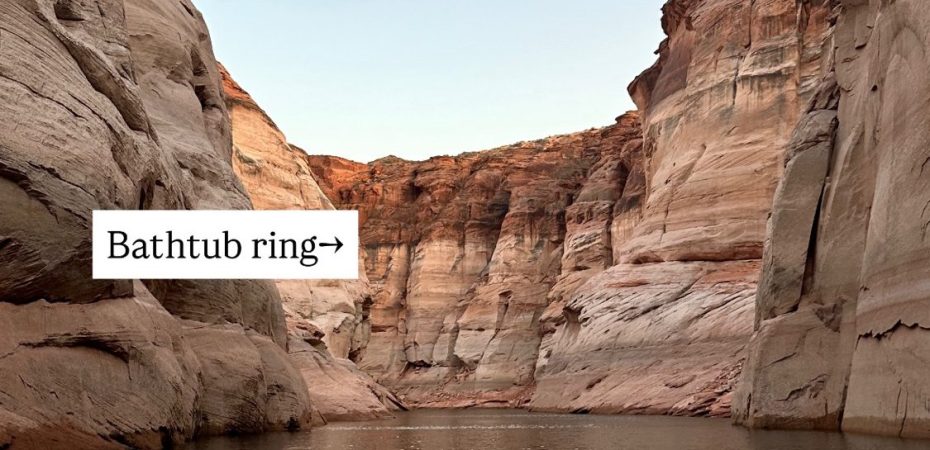
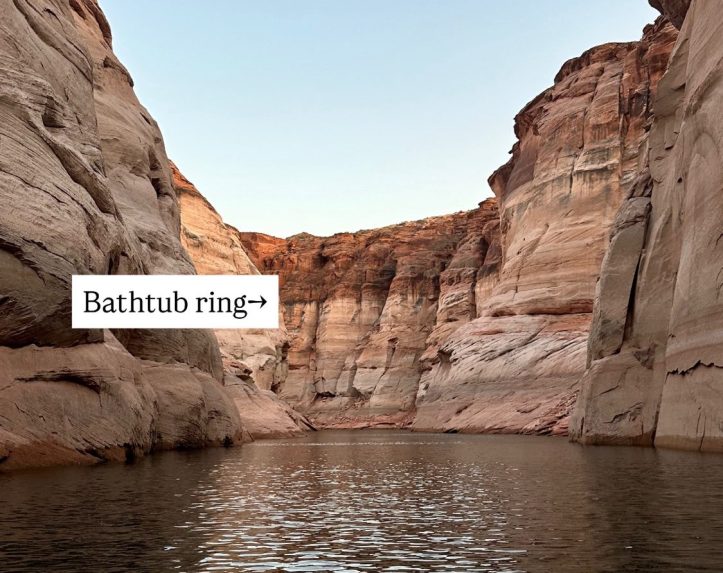
On the water, I point to the bathtub ring, 173 feet above us, a white line underneath the red sandstone that marks when Lake Powell was at full pool in 1983. The reservoir waters contain high levels of calcium carbonate, which left a white stain on the maroon Navajo Sandstone.
A smile creeps across my face when I notice water trickling out of the sandstone. Not a spring, but a seep.
Sandstone acts like a sponge. When Lake Powell was full, the sandstone absorbed the reservoir’s water. Since the reservoir has dropped, water is seeping out of cracks and dripping into the lake. A magnificent sound: running water.
Lake Powell makes all sorts of sounds when waves from wake boats crash into rock and bounce into my kayak. But the delicious sound of trickling, flowing water is rare to hear out here.
I listen. I stick my fingers in and let the water pour over my palm. I am happy to be paddling and leading tours again. I love teaching people about Lake Powell, the Colorado River, the Glen Canyon Dam, and water in the West.
Guests come from all over the world to paddle into Antelope Canyon. On today’s tour alone six countries are represented among ten people: Poland, Canada, France, China, Thailand and the United States.
We reach the beach and my mouth hangs open. Out in the deep water and in the main channel of the Colorado River, 32 feet of water loss is visually represented vertically. But in the back of the canyon, where the water may have only been 2-10 feet deep, the changes are more significant. More confusing. The water runs into the beach nearly half a mile sooner than this time last year.
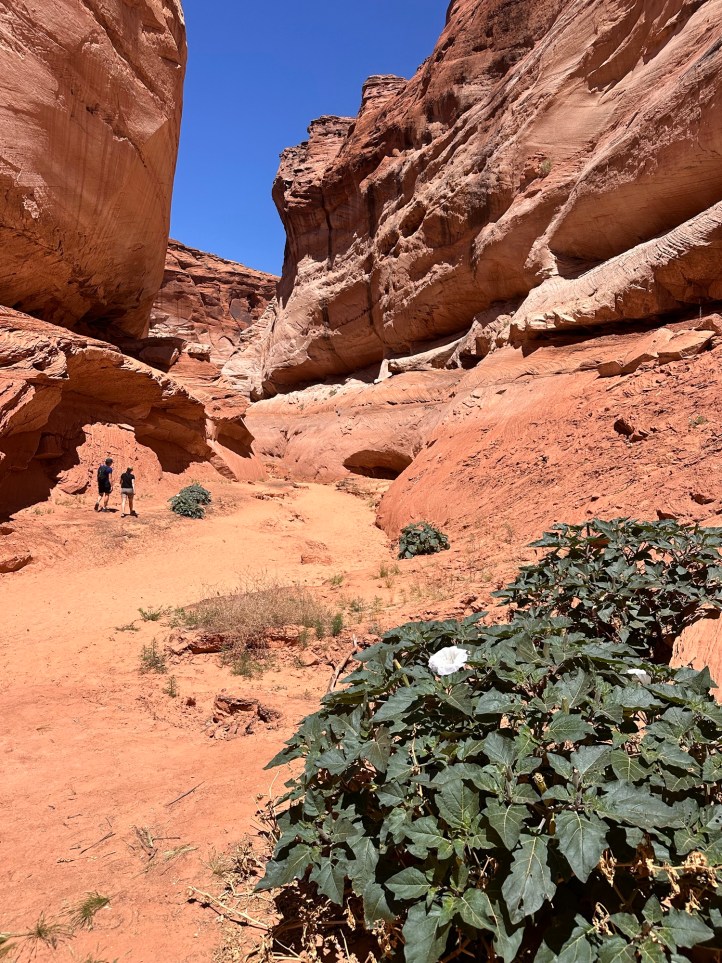
My clock is off, we hike through deep sand for two to three bends before we reach where the beach was last year. I tell my guests, I point to the line in the sand that shows where the water lapped. Again, they say “Wow!” and I’m saying “Oh my gosh!” and we’re all yapping about the changes non-stop. In place of the water are four foot tall bushes of sacred datura, blossoming white moon flowers with a faint purple rim along the flower’s edges.
It’s beautiful. In less than 9 months without water, a native plant re-established itself in droves. Thick, healthy bushes of datura spreading out in every direction that could be drowned in again in a few months, depending on what happens with the snowmelt and the releases from The Flaming Gorge reservoir.
It’s all a little heart breaking too. Some things I’ll never see.
What would it have been like to paddle Antelope Canyon at full pool? Where did the water end? Would I be the only paddler in the canyon, before all these kayak companies sent hundreds of tourists in a day? I wasn’t even alive then.
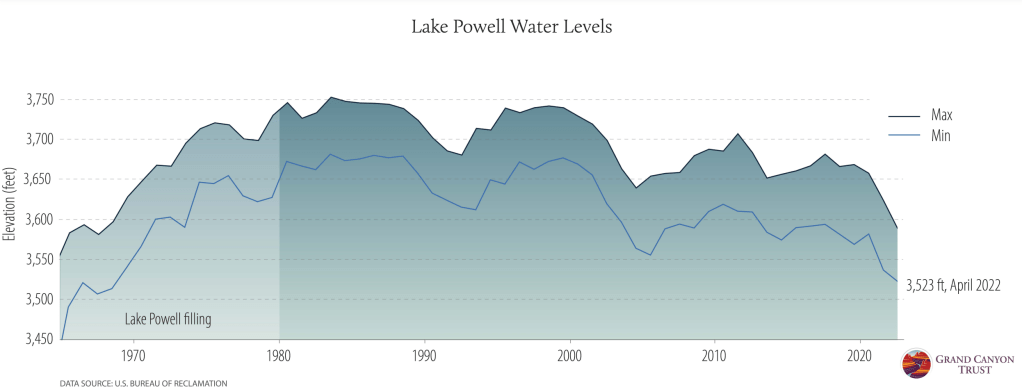
I doubt Lake Powell will ever be full again. It took 17 years to fill and remained at 100% for three short years. The water levels were close to full pool until 2000, but since then it’s been on a steady decline due to overuse, mismanagement, aridification, evaporation, and less snow each year.
I wish I had time goggles that could show me what Glen Canyon looked like before the reservoir. Something else I’ll never see.
This place evokes a persistent, burning curiosity in me. While paddling back to the boat ramp, constant questions run through my mind. How deep is the canyon below me? What am I paddling over? Dryfalls, spires, narrow slot canyons with tight walls? At the mouth, where Antelope Canyon widens to meet the Colorado River, was the confluence forested with cottonwoods and willow? Or was it a suspended dryfall?
A place I nearly memorized last summer is once again born anew. Rocks I didn’t know I was paddling over last summer are now 15 foot tall obstacles that we paddle around.
Lake Powell, Antelope Canyon, Glen Canyon…it’s a place I feel like I’ll never know. No matter how many days, weeks, years I spend exploring, it will always change.
Sometimes I day dream about floating down the Colorado River through Glen Canyon with my kids, pointing to a rock ledge some 400 feet in the air and saying, “There! We used to camp there! Lake Powell used to be all the way up there!”
And my kids would roll their eyes at my ancient, unbelievable tale the same way I used to roll my eyes when my dad said he used to walk to school uphill, both ways. I daydream about an uncertain future, and in that reality, while I’m floating down the river, I miss Lake Powell and my kids wish they could’ve driven a motor boat around to see it.
Because this place evokes a ruthless longing. An unending desire to explore. A deep respect for all that is natural and all that was created. An eager inquisitiveness for what once was, what is, and what will come.
Thanks for reading! This blog is reader supported. Consider becoming a paid subscriber today.

