Jaden and I opened a new guiding business in January 2026 called Pronghorn Expeditions based in Page, Arizona.
As new business owners, we were warned to stay out of politics.
Old timers in our community recommended that we stay neutral and quiet to avoid social backlash that could harm our company’s reputation.
Pronghorn Expeditions operates scenic 4×4 driving and guided hiking tours in Glen Canyon National Recreation Area, and our guiding permits will soon be approved for the Grand Staircase-Escalante National Monument (GSENM).
The GSENM is protected public lands for all of us to enjoy. It’s beautiful, quiet and vast with some of the world’s most unique geology on display. Home to old growth forests, pristine desert rivers and springs, ancient cultural sites, and rare dinosaur fossils only found in Grand Staircase.
But Utah Congress members are working to dismantle the monument protection plan. A plan created by the Bureau of Land Management who worked with Tribal Nations, ranchers, guides, local governments, and the public, or in other words- the experts of the region.
We trust the experts, the ones who live here and have generational connections to the land. We are grateful for their knowledge and stewardship, and decided we couldn’t be quiet about this.
We are following in the footsteps of past generations, who decided this place is worth protecting. And we agree.
We decided that protecting this land for future generations was worth any social backlash we might receive as new business owners, so we signed a letter to Congress advocating for the continued protection of Grand Staircase-Escalante National Monument.
We spoke up not just for the success of our guiding business and the guests we hope to share this landscape with, but for all citizens who travel to see this region.

This is our shared public lands, for U.S. citizens and worldwide visitors.
We spoke up for the 660 species of bees in the monument, for the 1,400 year old pinyon and juniper trees. We advocated for clean water, sculpted canyons, and over 200 bird species that call the monument home.
We spoke up so that future generations can explore this wilderness too.
Instead of backlash, we grew our community and made meaningful connections with other business owners in the GSENM gateway communities who also advocated for the continued protection plan.
The Southern Utah Wilderness Alliance (SUWA) organized the letter to Congress and reached out to thank us for speaking up for GSENM.
As a thank you, they partnered with Ecoflight, a non-profit that offers free flights over critical ecosystems in the West to educate and inspire stewardship, and offered us a seat in a small plane. What a way to say thank you!
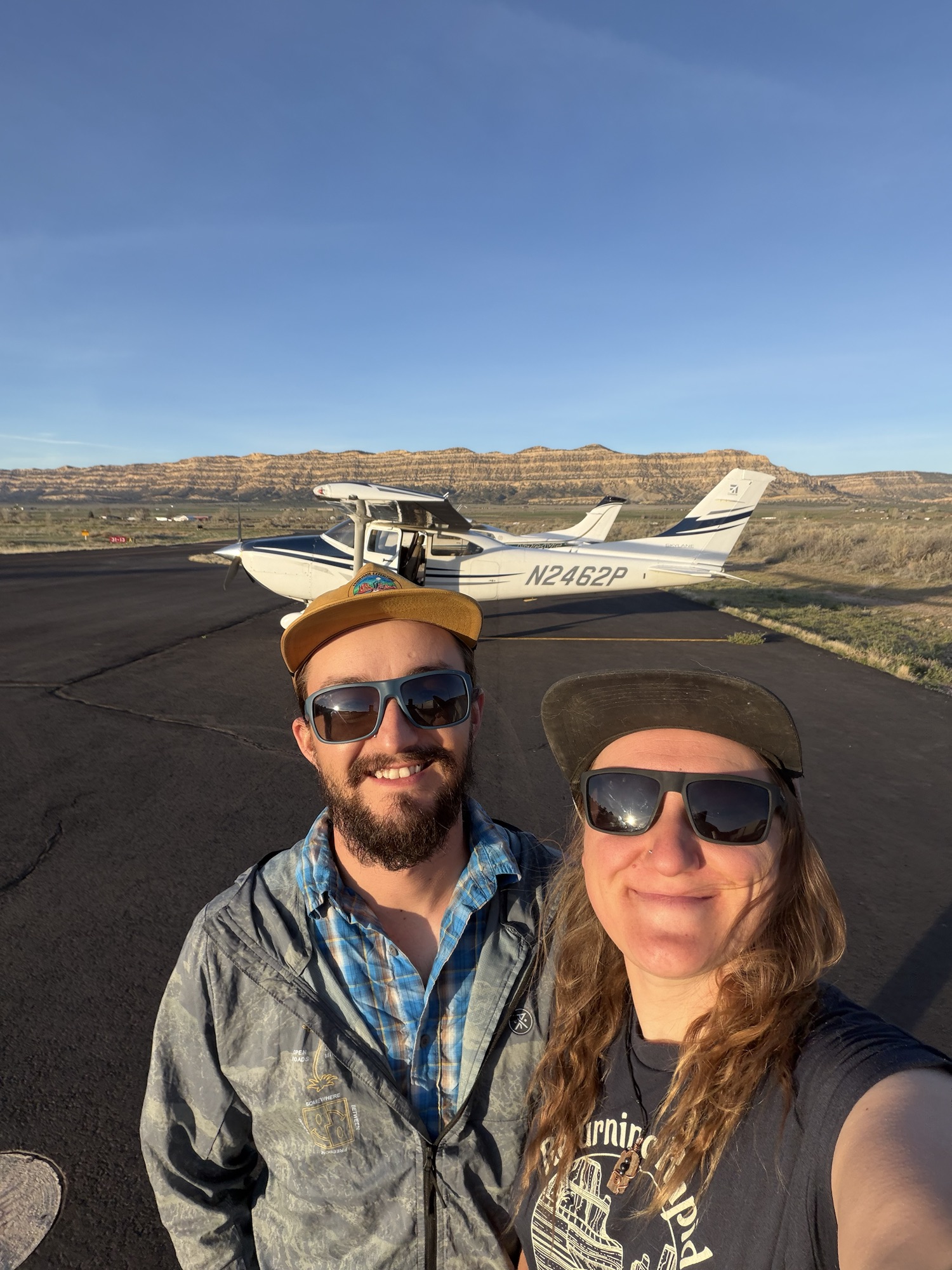
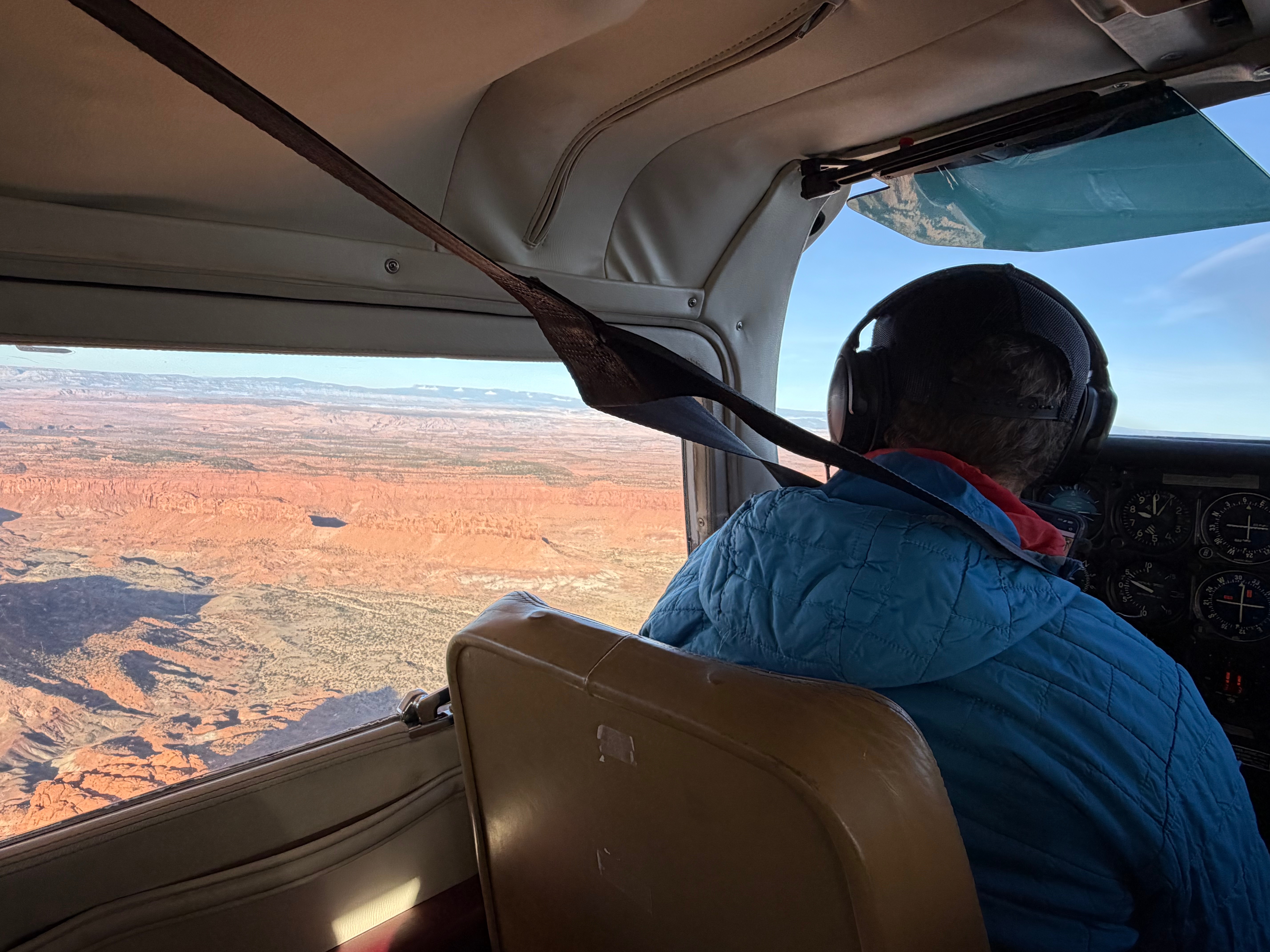
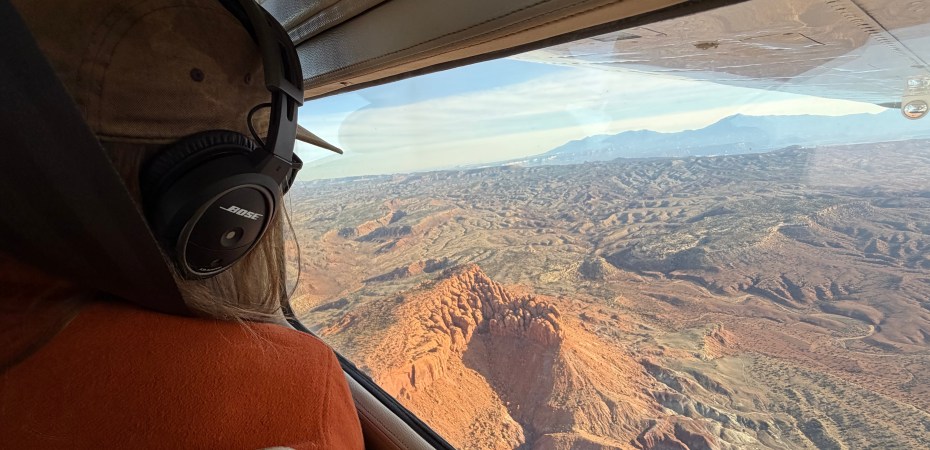
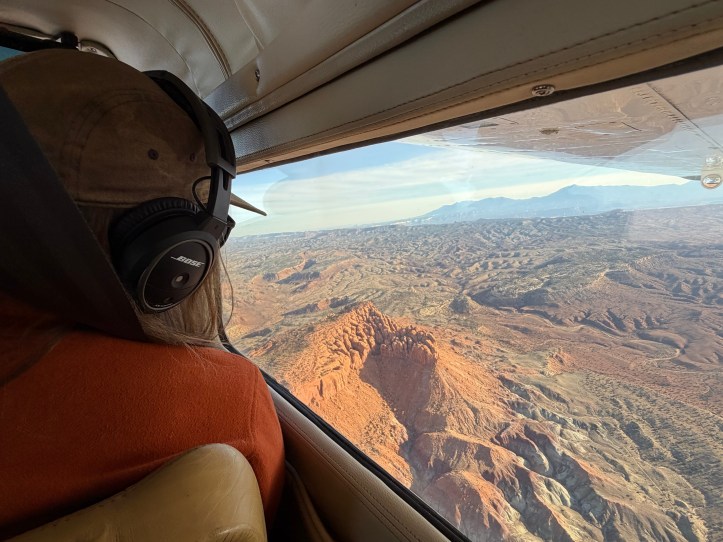
Jaden and I traveled to Escalante, Utah to fly over the monument with other business owners, tribal leaders, writers, and employees in the region (who are linked in the bottom of this post).
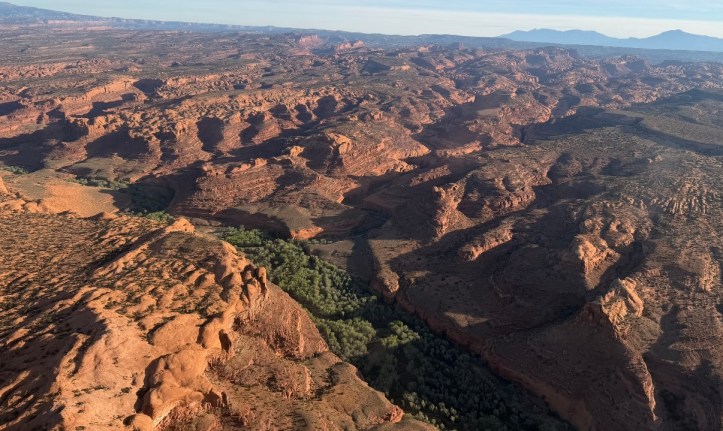
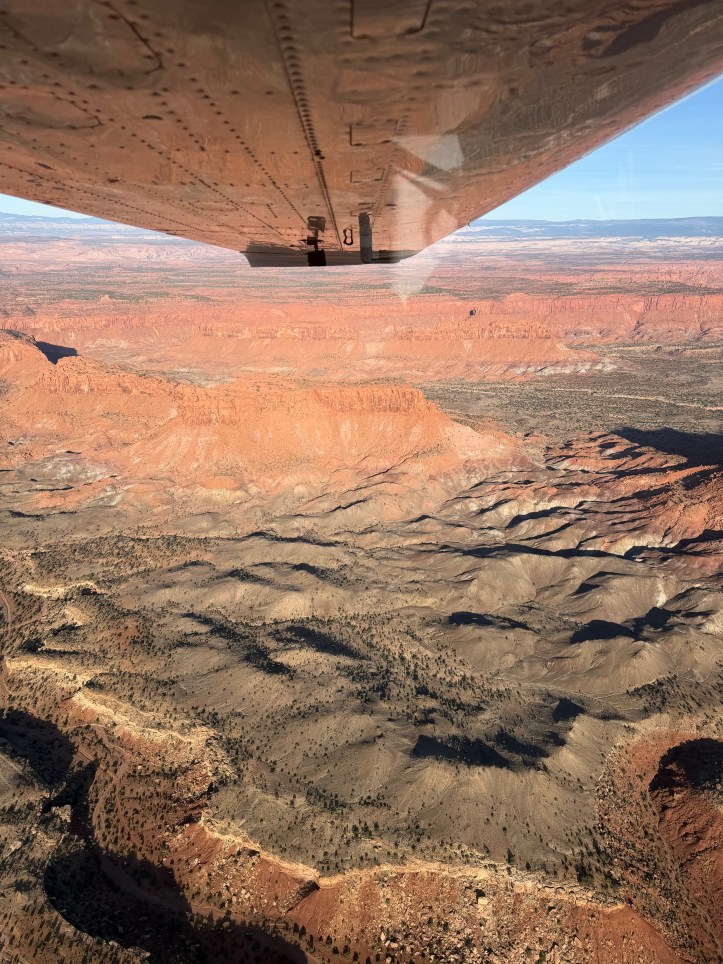
In the sky, we witnessed a vast ecosystem of interconnected canyons, ridges, mesas, and mountains that are usually imperceptible when I’m walking on the canyon floor with walls of Wingate sandstone rising around me.
I craned my neck, almost pressing my nose to the small plane’s window. Not wanting to miss a thing, my head swiveled back and forth trying to take in every geologic layer exposed.
To the south, Navajo Mountain’s dramatic ridge lines were hidden by the early morning sun’s glare. Instead, the peak appeared soft and rounded, emanating a gentle blue hue. Lake Powell snaked around the base, hidden by deep canyons.
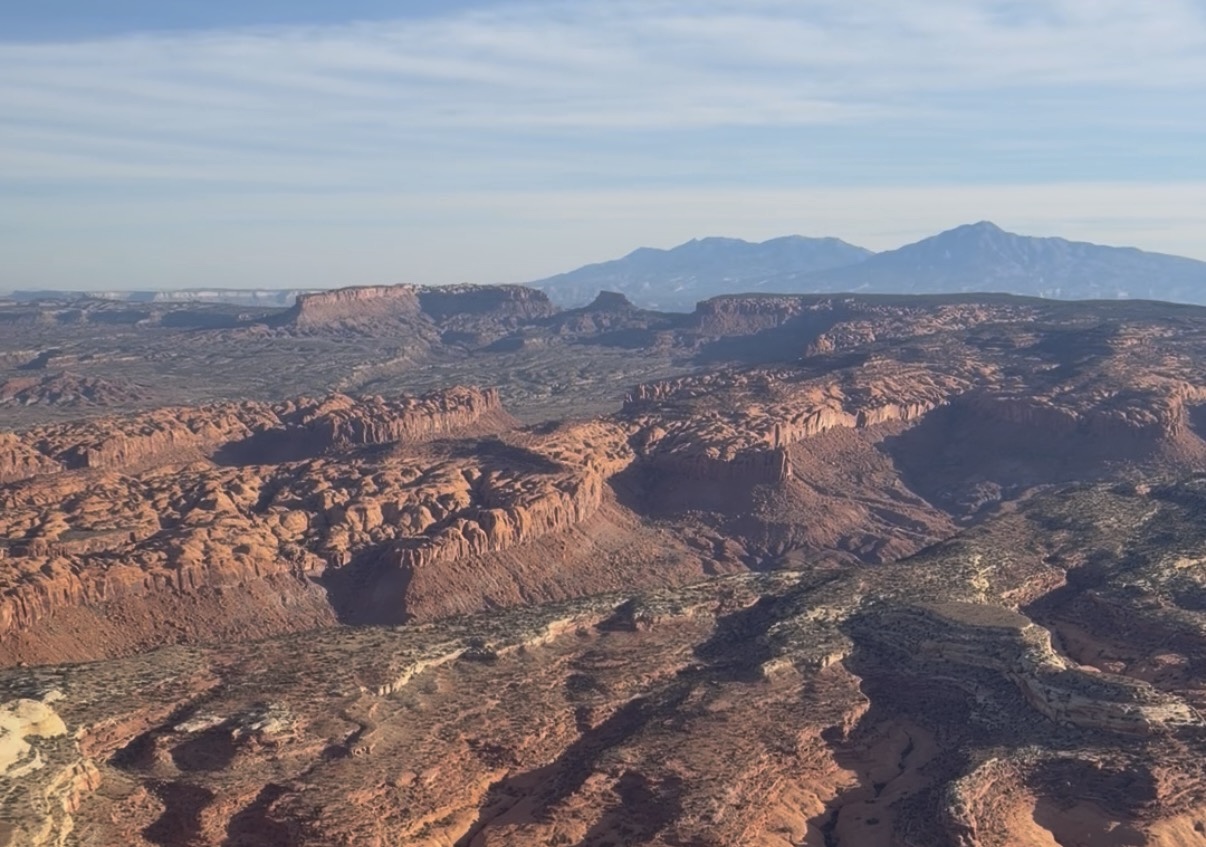
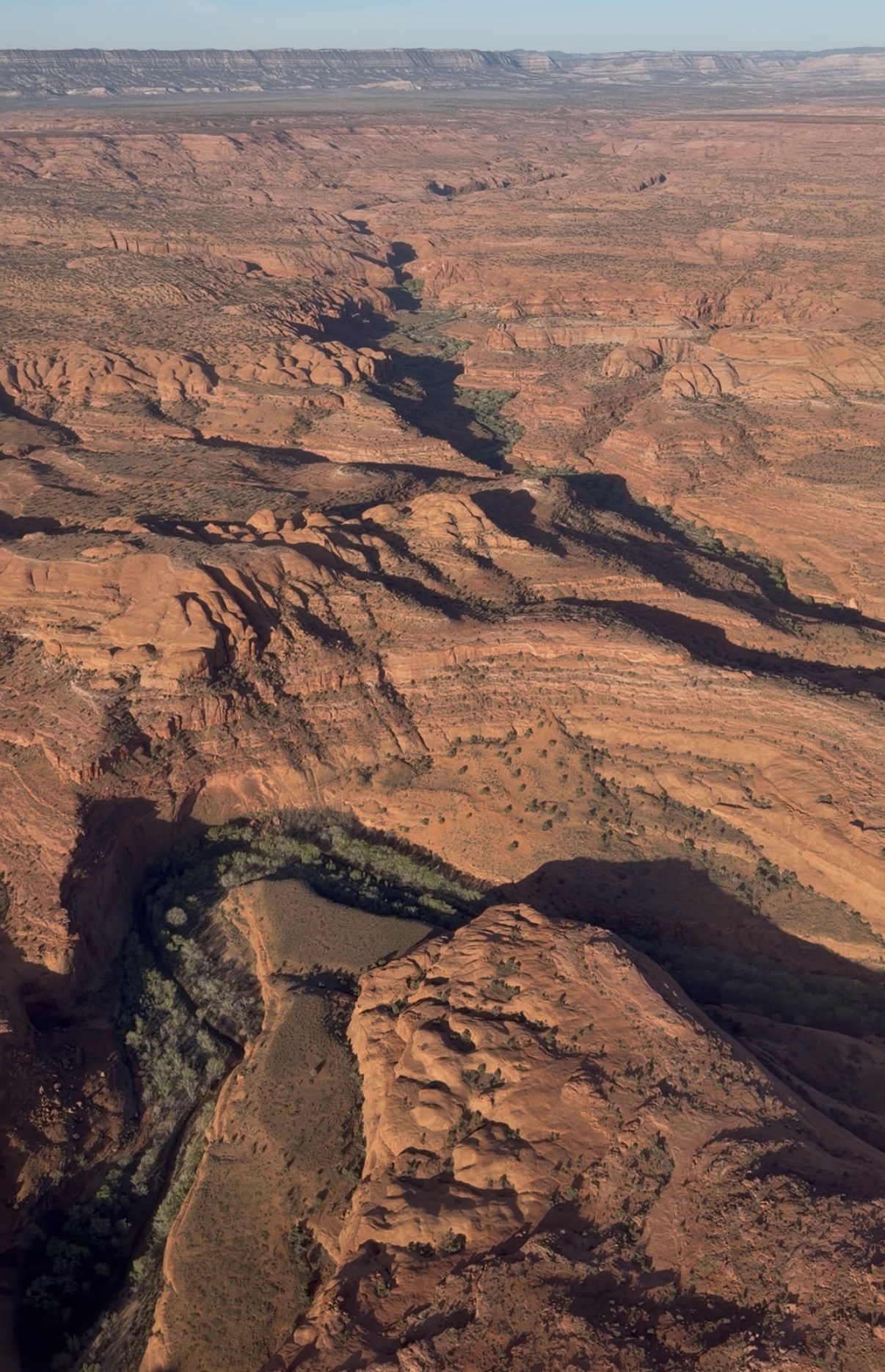
The pilot steered us east, toward the Henry Mountains, another jagged set of peaks that glimmered blue as the sun rose. We followed the uplifted waterpocket fold, and I stared, mesmerized by the canyons flowing off the uplift.
From the air, the tributaries flowing into larger canyons looked like a string of connected human blood vessels or the veins of a leaf.
We flew over a land of mostly maroon mesas, marigold sand dunes, cinnamon hills, and salmon sandstone canyons. Dotted on top of coral cliffs stood old growth forests of pinyon and junipers who have rooted there for up to 1,400 years.
Glowing orange sandstone fins hugged the meandering canyons of ribboned waterways where cottonwoods were growing the year’s first leaves. The color green pops in this arid land.
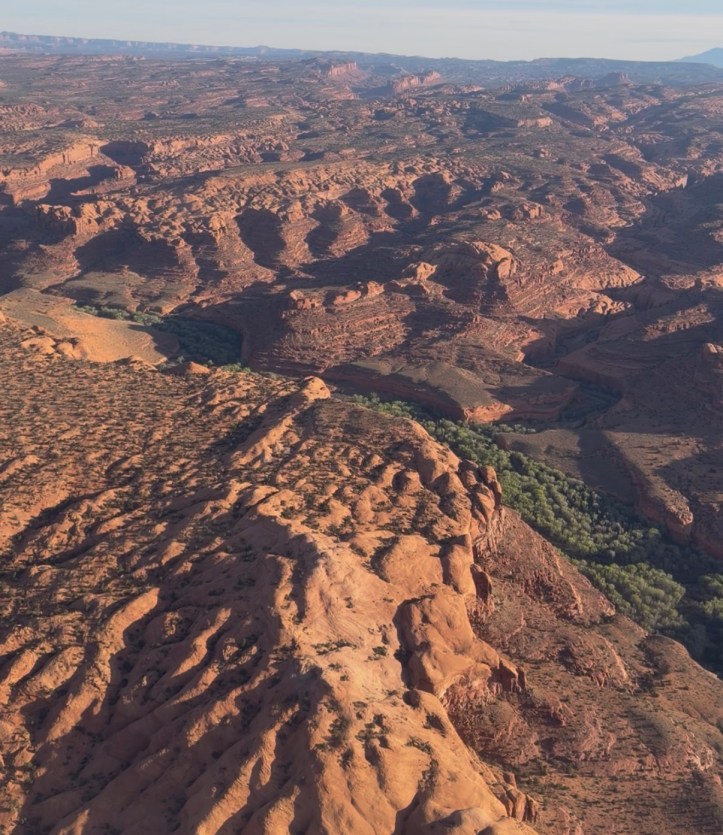
It was almost too much to take in all at once. I couldn’t decide which window to look out of. Almost frantically I alternated between the map on my phone and the ground beneath us, identifying the distant Bears Ears on the horizon with delight but wondering about the maze of connected canyons below.
We flew north toward the forested Aquarius Plateau, where the aspens have yet to leaf out but the fir, bristlecone, and spruce dotted the high elevation with a dark green blanket. The plateau is home to the headwaters of the Escalante River, which flows south into Lake Powell.
The pilot said, “I think we’re close to Calf Creek Falls,” and I looked out the window and shouted, “There it is!” with the same excitement of a kid seeing Santa Claus in the mall for the first time. I pressed record on my phone, not knowing if the waterfall was in the shot because I couldn’t bear to look away.
Water cascading into a pool in the middle of a vast slickrock desert is nothing short of miraculous and beautiful.
In between pristine canyons and uplifted forested mesas were farmlands cleared of vegetation and in its place- cows, horses, houses, trucks, trailers, and heavy machinery. While we need agriculture, food, and grazing permits to exist, the monument protection plan aims to balance humanity’s greed for land and leave some places protected.
In her Substack, Wild Words, Morgan Sjogren wrote about flying over active mining claims in the Circle Cliffs, which pre-dated the monument and therefore were allowed to continue operations.
While flying, I wondered what would happen to this place if the Monument Protection Plan was overturned? Likely more extractive industries would move in, looking to open public land to more grazing and mining.
The problem with introducing new mining claims on public lands is largely the fact that they are unnecessary, since the U.S. currently has over 12,000 active mines and over 510,000 mining claims on public lands. Most claims are not in use, so why would we need to open new areas?
Plus, there’s estimated to be around 38,000 abandoned mines on public lands, leftover from the past where there weren’t any regulations about closing them properly to prevent environmental degradation. Abandoned mines leak heavy metals into the soil and groundwater, contaminating ecosystems and drinking water with toxins that last for decades.
Today, state and federal regulations require abandoned mines to be cleaned up and properly dispose of waste.
The Department of the Interior estimates there are more than 700,000 abandoned mine “features,” across the country, approximately 86% of which are related to past hardrock mining. As many as 40% of rivers and 50% of lakes in the U.S. have been contaminated by pollution from abandoned hardrock mines, according to the Sierra Club’s research.
So why is the federal government looking at creating new claims and destroying new environments when they haven’t even begun to address abandoned mines nor are they currently operating on existing claims?
I was only one year old when Bill Clinton designated the protection of Grand Staircase-Escalante National Monument in 1996. To witness our shared public lands rescinded twice in my lifetime, first in 2017 by President Trump, and again now by Utah’s Senator Mike Lee and Celeste Maloy, who introduced a joint resolution to undo the Grand Staircase-Escalante National Monument Management Plan using the Congressional Review Act (CRA), is simply heartbreaking.
Grand Staircase is an easier target than popular sites like Yosemite and Zion, where millions of visitors visit each year and protection already spans 100 years.
Grand Staircase is young and remote, yet to be discovered by many. The Utah gateway towns of Escalante, Kanab, and Boulder have a combined population of less than 7,000 residents, but businesses and residents are speaking up for the continued protection of the monument.
The Grand Staircase-Escalante region needs our help, because it’s not just for the residents of Utah. The land is for all of us, to be shared and protected for future generations.
Call your Senate Representatives! Tell them to vote no on the Lee-Maloy joint resolution for Grand Staircase. They are also using the CRA to rescind protection for the Boundary Waters Canoe Wilderness Area in Minnesota, and they won’t stop there.
If this passes, all of our national monuments will be at risk.
Our public lands are not for sale.
THANK YOU! to the businesses who support the GSENM Protection Plan:
- Basecamp37 in Kanab, Utah (an amazing glamping spot)
- Willow Canyon Outdoor in Kanab, Utah (the best place to buy regional books!)
- Boulder Mountain Guest Ranch in Boulder, Utah
- Small Canyon Kitchen in Boulder, Utah (delicious food truck for Navajo Tacos and frybread
- Hell’s Backbone Grill & Farm in Boulder, Utah
- Glen Canyon Backcountry Club- guiding company coming soon in Escalante, Utah
- Dreamland Safari Tours in Kanab, Utah
- Author & Activist Morgan Sjogren- read her Substack Wild Words here
- Pronghorn Expeditions (that’s us!) in Page, Arizona
- And more!
Get involved:
- Capitol switchboard: 202-224-3121- Call your reps!
- Here’s a list of actionable steps you can take to protect GSENM provided by SUWA
- Elevate the voices of the Grand Staircase-Escalante Inter-Tribal Coalition
- Donate to Ecoflight here
- Donate to SUWA or become a member
 Beth Henshaw
I’m super grateful that you wrote this! And I’m adding a link to it on my substack now.
Great work, Beth!🧡
Morgan Sjogren
morgansjogren.com
LikeLiked by 1 person
Thanks, Morgan! Also grateful for your words as inspiration, and so glad we both got to experience this!!
LikeLike