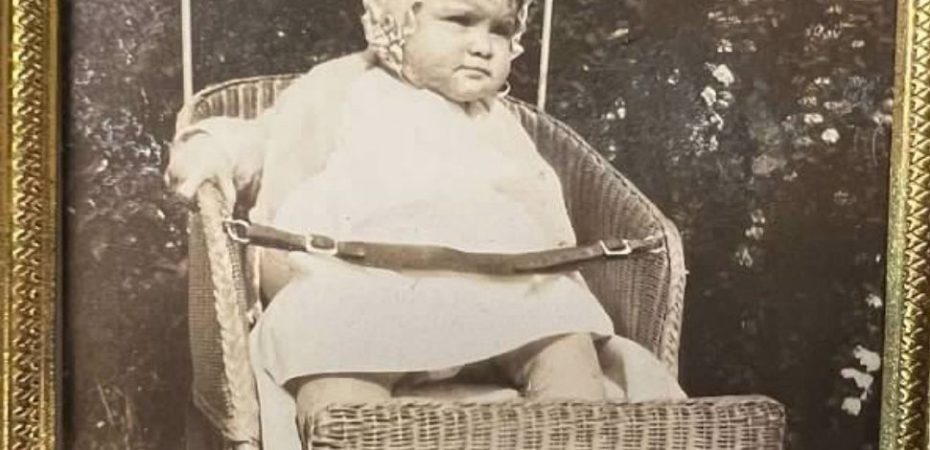
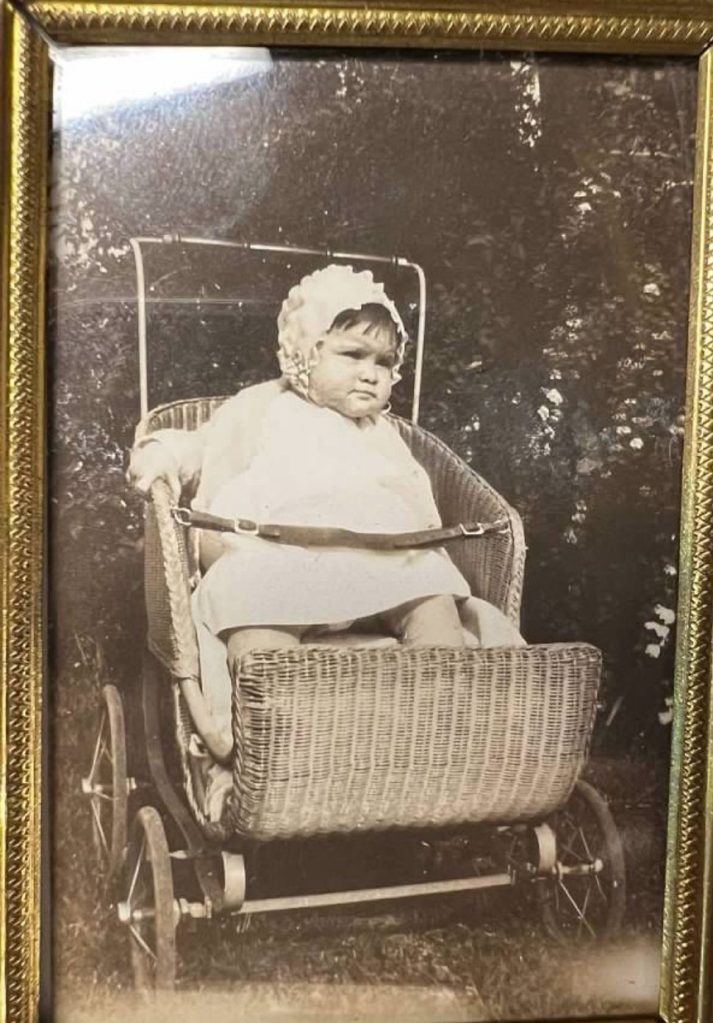
1930
Dorothy Cornelia “Connie” Hoggard Colvig Miller was born on June 6, 1930 in Rich Square, NC, into a world of about 2 billion people during the Great Depression. She was born with more rights than her mother had at birth, as the right for women to vote celebrated its tenth year. The automobile revolution exploded in the roaring 20’s, so by the time Grandma was born, nearly 60% of Americans had a brand new car which drastically changed daily life.
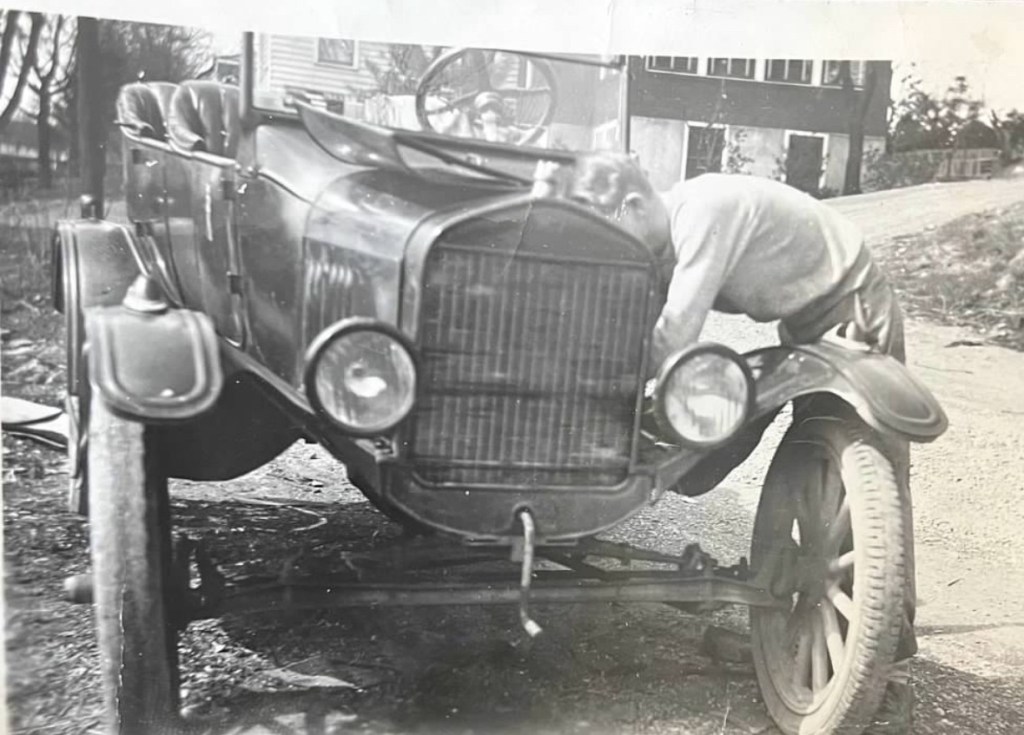
But Grandma remembers visiting her grandfather as a young child where he would take her on horse and buggy rides, which served as the main form of transportation from the 17th-early 20th century.
Grandma was born was the same year that:
- The first telephone connection was established between Britain and Australia
- Pluto was discovered
- The first red and green stoplight was installed in Manhattan
- Scotch tape was invented
- Looney Tunes aired for the first time on television
1932
When Grandma was only two years old, Amelia Earhart became the first woman to fly alone over the Atlantic Ocean.
1933
By three years old, prohibition officially ended. The unemployment rate for US citizens hit an all time high at 25%.
15 million people, including her parents, were out of work.
Her dad owned his own business, a crankshaft service, which is part of an engine. He didn’t have any employees and it’s unclear what happened to this business.
During the Depression years, her mother made yeast rolls and sold them to neighbors for pin money.
In a recorded interview with my mom, Grandma said, “My mother was not educated but she was a thinker. She knew how to stretch a dollar.”

1935
Monopoly and nylon were invented when my Grandma was five years old.
Shenandoah became the nation’s 22nd National Park, and construction of one of Grandma’s future favorite places to camp, Skyline Drive and the Blue Ridge Parkway, began as a part of Franklin D. Roosevelt’s New Deal plan to create jobs. Up until this point, the only way to access the remote Blue Ridge Mountains was by foot or horse.
1936-1939
Not much is known about her early childhood. Like most families in the Great Depression, her parents were poor. They couldn’t support their two children, so they decided to support just one: her younger brother Bill.
Grandma was sent to live with different relatives from 2nd grade-6th grade while Bill stayed with her parents. In an interview with my mom, Grandma said, “Bill has memories I know nothing about. He remembers our parents sitting on the front steps singing together. I never heard either one of my parents sing.”
Grandma’s least favorite place that she was dropped off to live was on a tobacco farm. She remembers spending most of her days out in the fields, feeling disgusted that her skin, clothes, and hair were constantly covered by tobacco.
She told my mom, “I was accepted by my relatives, but it was very clear that I was not part of the family.”
Throughout the Great Depression, school was considered a luxury and children were more useful to their families if they could earn income. An estimated 20,000 schools in America closed during the Great Depression. Boys as young as 13 worked in coal mines and factories. Girls could babysit, clean houses, and pick crops. Many children ran away in search of a better life, choosing homelessness and jumping moving trains to new places. We know these kids now as the BoxCar Children.
But Grandma didn’t run away or jump trains. She attended school on and off in different North Carolina counties. We wondered what she did to get through those years.
In the recorded interview she said, “I learned not to communicate to try to make everything good and happy, but also to be very, very independent.”
Later she told me that the only way she made it through those years was by reading books about science and space exploration.

1940
Her second decade of life was no easier than the first. By the time she was ten, murmurs of war filled worried ears. The first FM radio transmission was made with static free signal. Fantasia, Bugs Bunny, and Pinocchio were released.
In the interview, my mom asked Grandma what her happiest memories of childhood were.
She said, “During Christmas time during the Depression, all the kids went to my grandparent’s house for dinner and to exchange presents. Almost every year we’d gather in the living room and there was one present for each person under the Christmas tree. My grandmother said, ‘Connie is the oldest grandchild. She’s going to hand out the presents.’ I felt so special.”
She also talked about visiting her grandfather, who was the bridge keeper on the Roanoke River in North Carolina.
“I used to be fascinated with Granddaddy living on the drawbridge. He had a tiny house on top of the bridge with a cot and hot plate. He took me up there, and it scared me to death,” she laughed.
“It had metal steps and a metal frame work, just tiny little steps all the way up. I was just fascinated with Granddaddy opening the bridge. Often the bridge would get stuck in the open position. He’d have to radio for maintenance.”
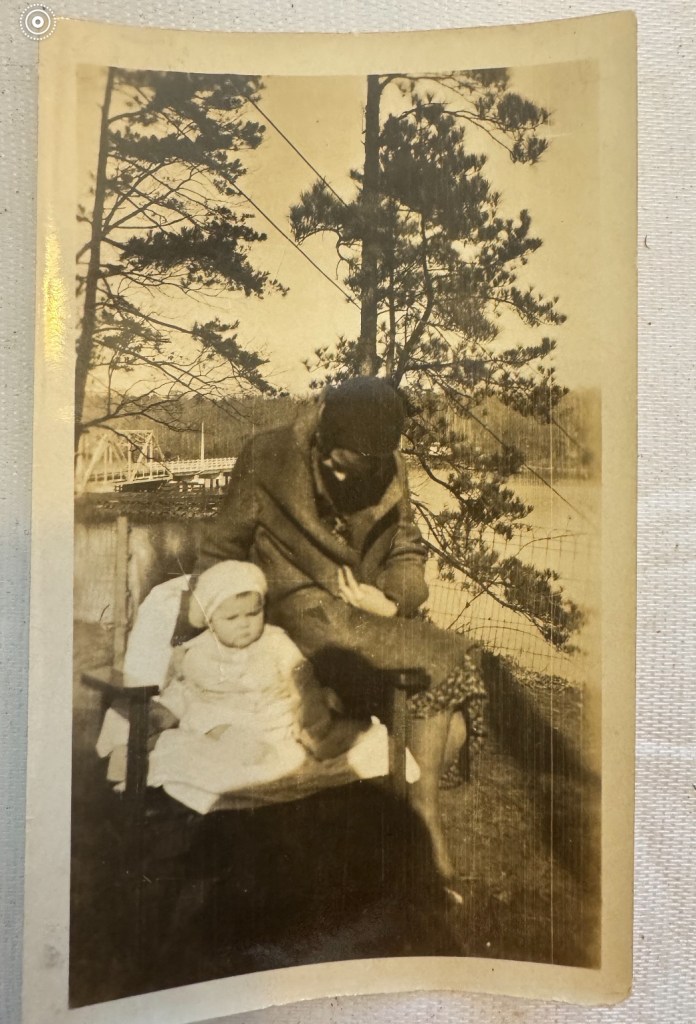
Grandma also shared that she loved spending summertime with her daddy’s sister, her Aunt Dot. Grandma said, “There was a housekeeper. She would dress me in patin leather shoes and tie pretty bows in my hair. I’d walk two blocks downtown to my aunt who was a post mistress. She would give me a nickel to get an ice cream cone.”
1941
When Grandma was eleven, the United States officially entered World War II. For the next four years, she lived through war time. Much like the Great Depression, rationing and food shortages were the norm.
Over ten million men were drafted, so women entered the workforce to support war efforts becoming welders, riveters, and electricians. Telephones were not used daily yet, so newspaper and radio reports of the war served as the main form of communication.
1942
When Grandma was twelve years old, she finally re-joined her parents and brother to live together in Richmond, Virginia, where she would stay for the rest of her life. Grandma told my mom in the interview, “When I came home, I never felt like Bill and my parents were my family. I always felt like an outsider.”
She also said, “It did impact me that Mother, Father and Bill were close and I was not part of it. They expected I would just fit back in.”
In Richmond, one thing Grandma loved to do was work for ten cents and walk to the Byrd Movie Theatre. On the way to the theatre, she liked to stop and chat with the veterans of the Civil War who fought to protect Richmond, which was the Capital of the Confederacy.

1945
At age fifteen, WWII ended when the U.S. invented and used the atomic bomb to destroy Hiroshima and Nagasaki.
Grandma went to high school, which was the first time in her life that she was at any school for more than a year.
1946
The first pictures of Earth were taken from space when Grandma was sixteen.
1947
When Grandma was in high school, there was no twelfth grade. Eleventh grade was graduation for high school seniors.
My mom and I spent time flipping through her high school yearbook, where we learned that her major was “commercial,” which meant she would enter the workforce. Most of the men’s majors were “college prep.”
As a senior, Grandma was involved in the Recreation Hall Committee which stated it’s mission “strives to make the recreation hall (lunch room) clean and orderly.” During her senior year, the club added a record player to the Recreation Hall for “those who wished to dance” when they were done with their lunch.
She was also a Red Cross Representative who “supplied the needs for a happier postwar world” by sending boxes to world orphans and hospitalized servicemen.
In her high school yearbook, Robert E. Lee’s birthday, a Confederate general, was highlighted as a traditional day for the Cadet Corps to attend Church together.
Segregation was law for all of Grandma’s elementary, middle, and high school years.
This is Grandma’s senior year photo:

1948
Grandma had dreams of going to college to study the environment or space exploration.
During WWII, women’s enrollment in college jumped to nearly 50%, but the G.I. Bill changed that. Men who returned from WWII were given priority admission, even to women’s colleges, and the number of women getting an education dropped to 30%.
Her mother was uneducated and didn’t see the value in it.
Her father told her, “A daughter is meant to be raised and married off.”
They told her no college, get a job.
Her younger brother Bill did not want to go to college, but was forced to get a degree by their parents who believed all men needed an education.
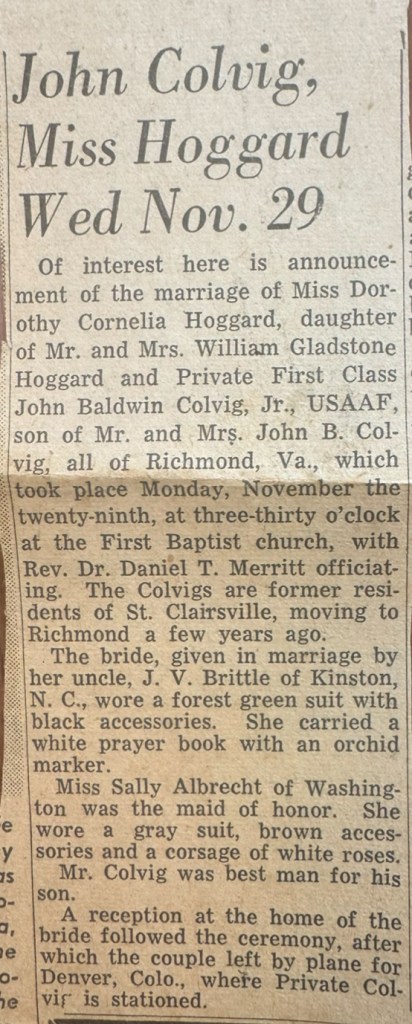
Instead of getting a job, Grandma got married a few months after she turned eighteen to the boy who lived next door, Jack Colvig.

Her father was furious and refused to walk her down the aisle.
The year Grandma got married was the year that The Cold War began, which would continue for the next forty five years of her life. The Polaroid Camera, Cheetos, and Cheez Doodles hit the consumer market that year as well as the 12 inch LP vinyl record, introduced by Columbia Records.
Here is the newspaper clipping from November 29, 1948 announcing Connie and John’s wedding:
Never miss a post. Enter your email to subscribe to Beth’s blog:
 Beth Henshaw
[…] To read part one, click here. […]
LikeLike
[…] you missed it- read part one here and part two […]
LikeLike
[…] you get started, catch up by reading part 1, part 2, and part […]
LikeLike